CRE Loan Origination Platform
An end-to-end platform that carries a commercial real estate loan from application through post-closing across eight connected stages. Upload the deal documents and it runs its own independent underwriting — then flags exactly where the paperwork and the numbers disagree, so the lender judges the deal on the right figures.
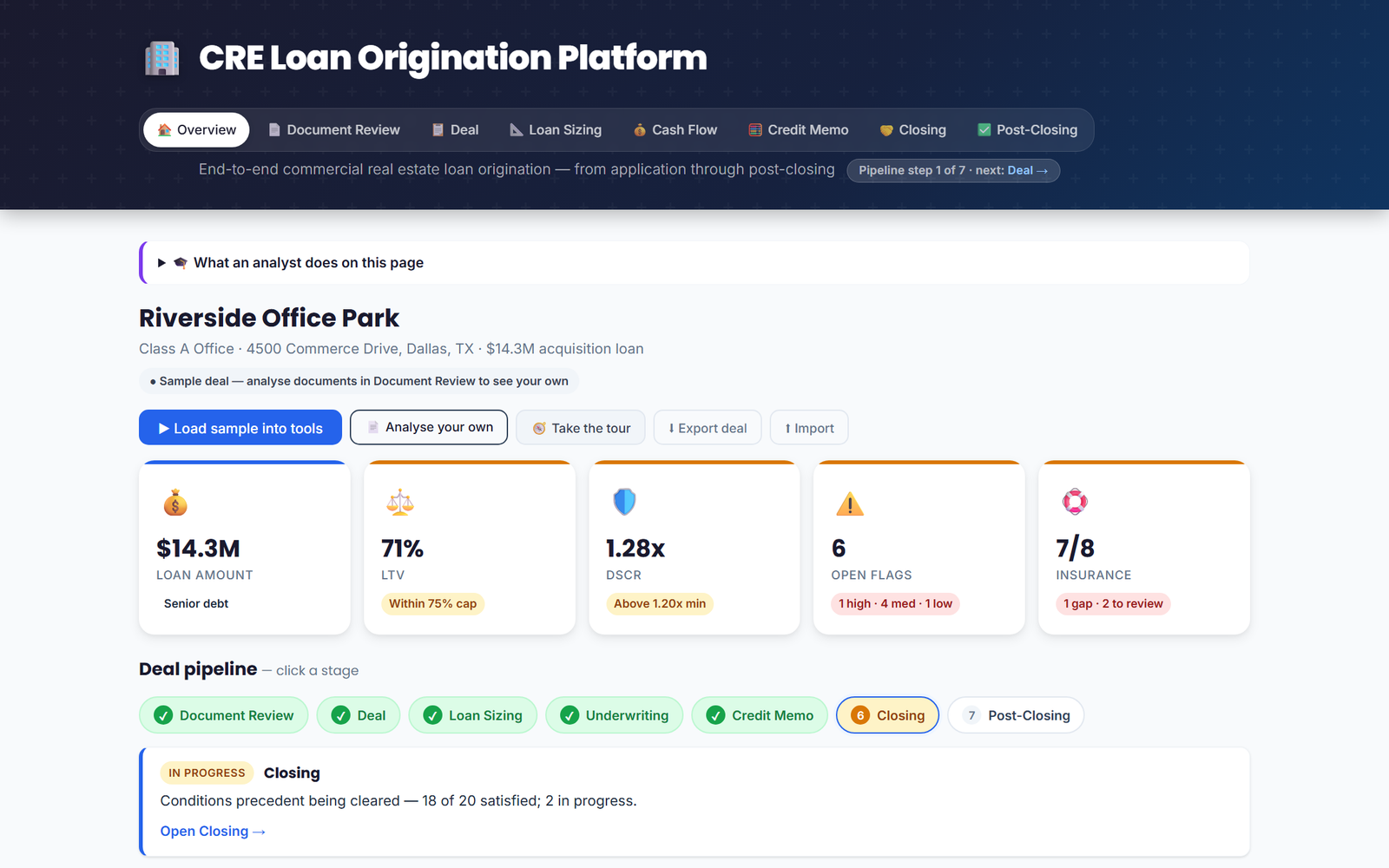
Deal Overview
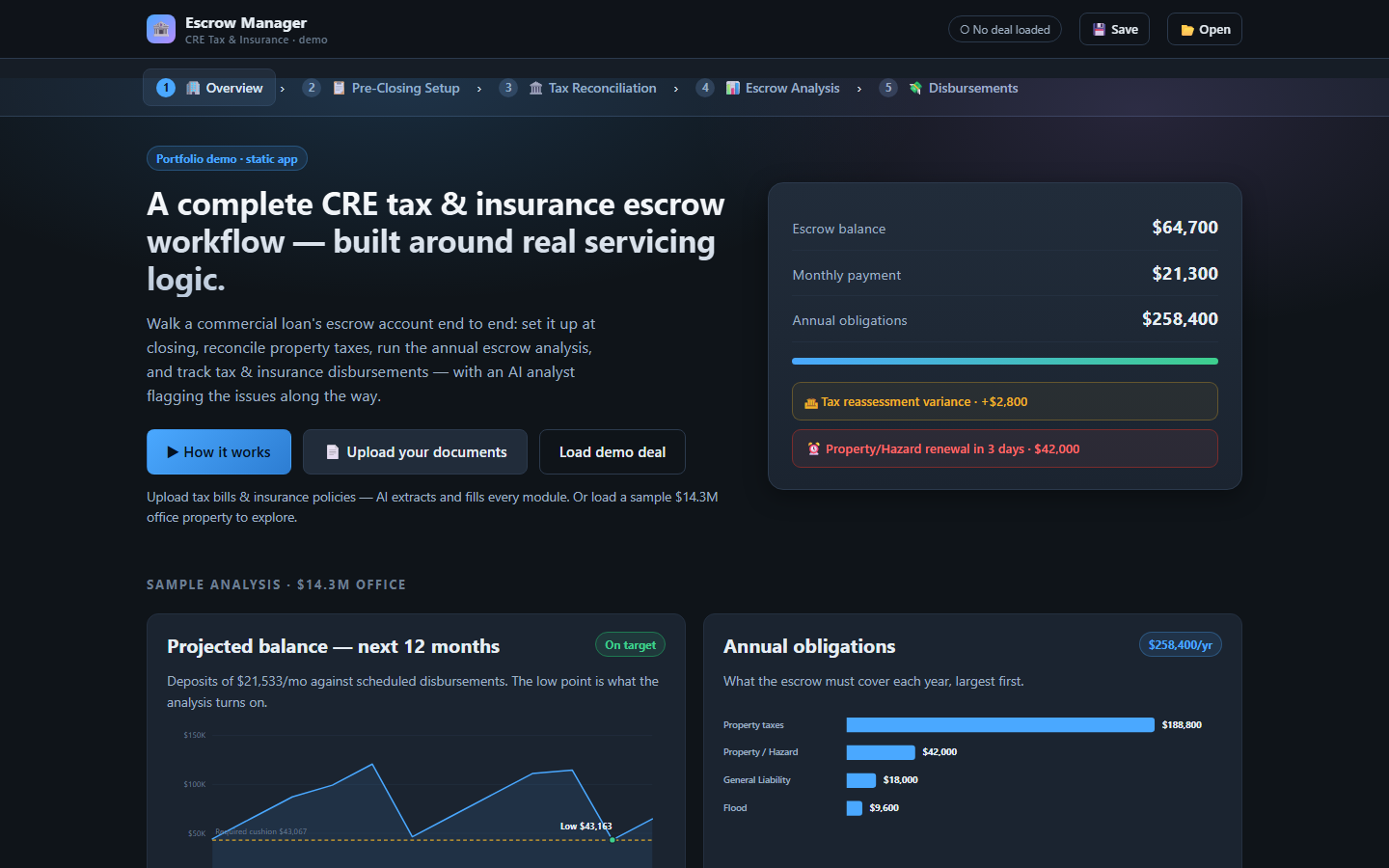
The command center for a live deal — Riverside Office Park, a $14.3M office acquisition. Loan amount, LTV, DSCR, open risk flags by severity and insurance status sit side by side, above a clickable pipeline that shows exactly where the deal stands, from Document Review through Post-Closing.
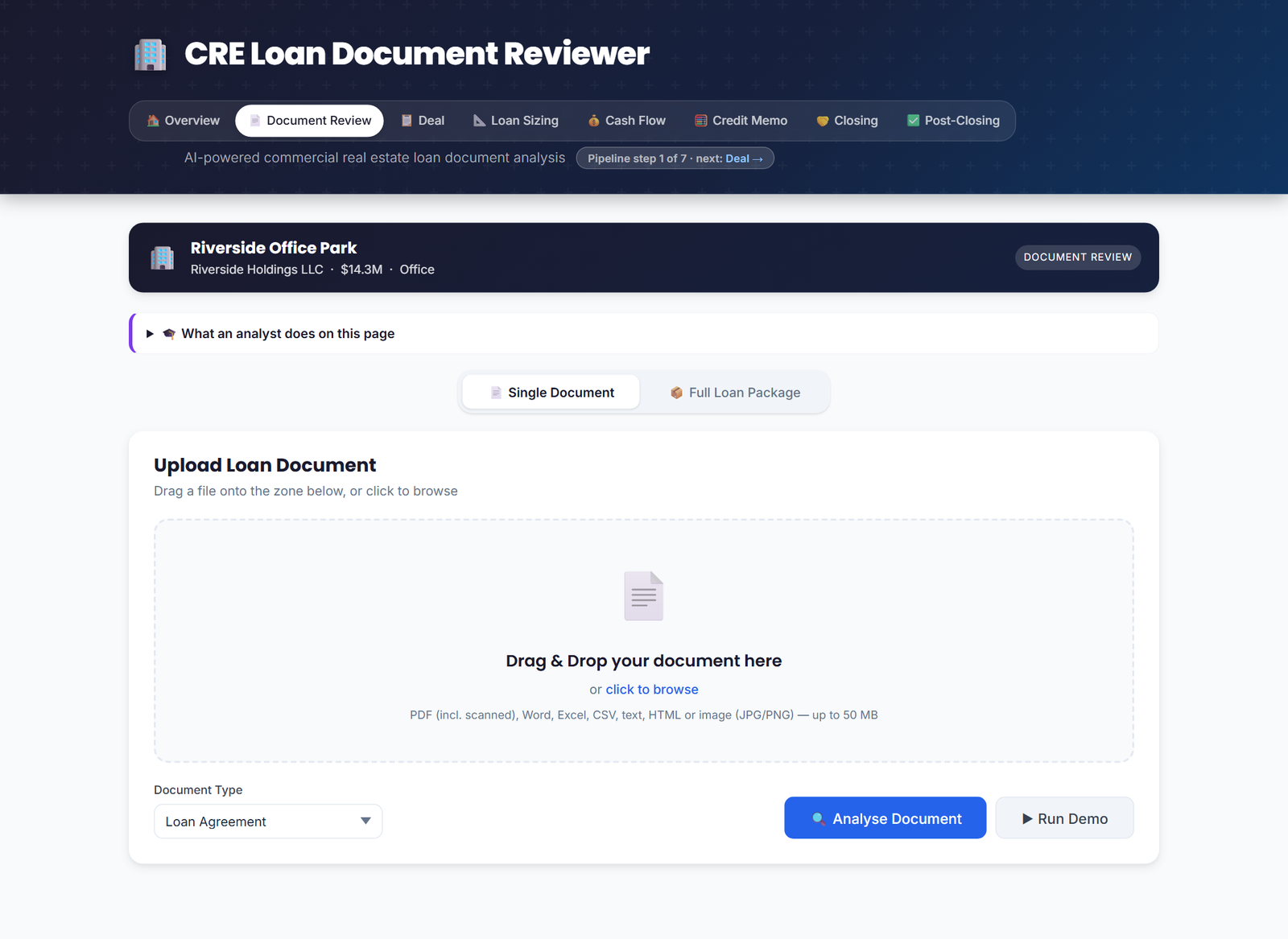
Document Review — the CRE Loan Document Reviewer
Drop in a loan agreement, rent roll, appraisal or operating statement — a single file or a full loan package — and the AI reads it and extracts the key terms. It handles PDF (including scanned), Word, Excel, CSV and images up to 50 MB, then feeds the findings into the rest of the deal.
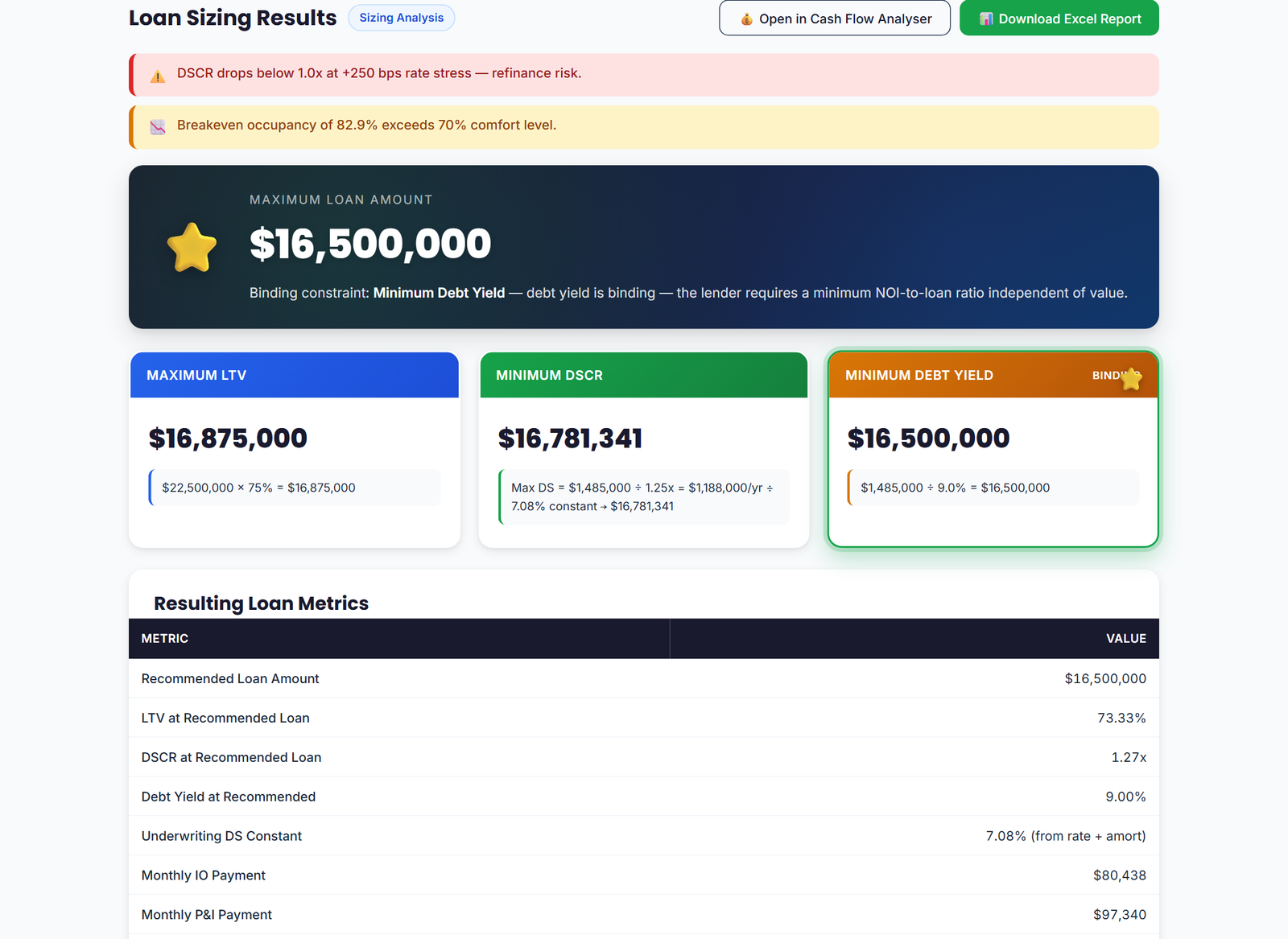
Loan Sizing
Sizes the loan three ways at once — maximum LTV, minimum DSCR and minimum debt yield — and shows which constraint is binding. Here debt yield caps the loan at $16.5M, while stress tests warn that DSCR drops below 1.0x at +250 bps and breakeven occupancy runs above the comfort level.
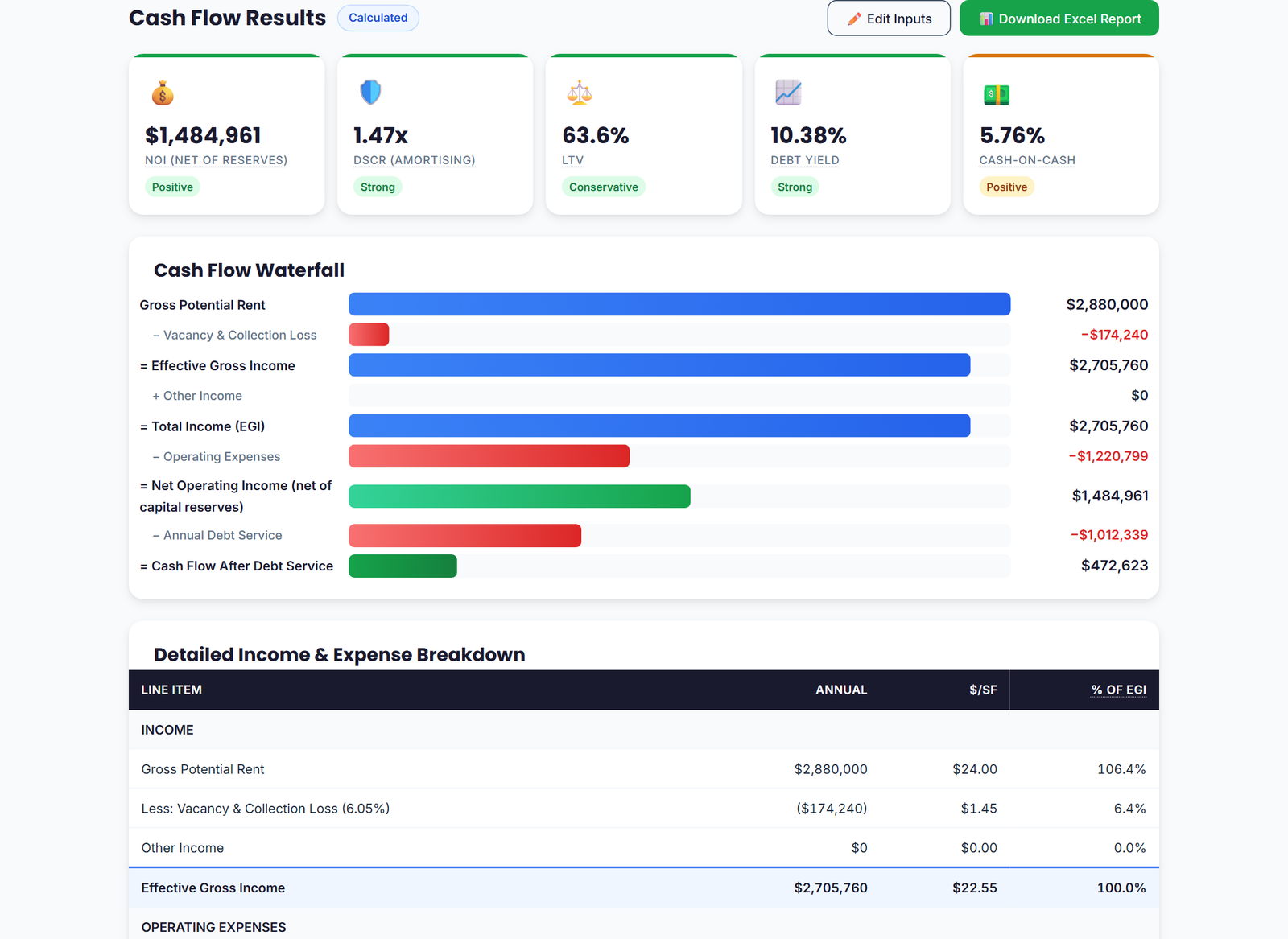
Cash Flow Underwriting
A full cash-flow waterfall from gross potential rent down to cash flow after debt service, headlined by NOI, DSCR, LTV, debt yield and cash-on-cash — with a line-by-line income and expense breakdown priced per square foot.
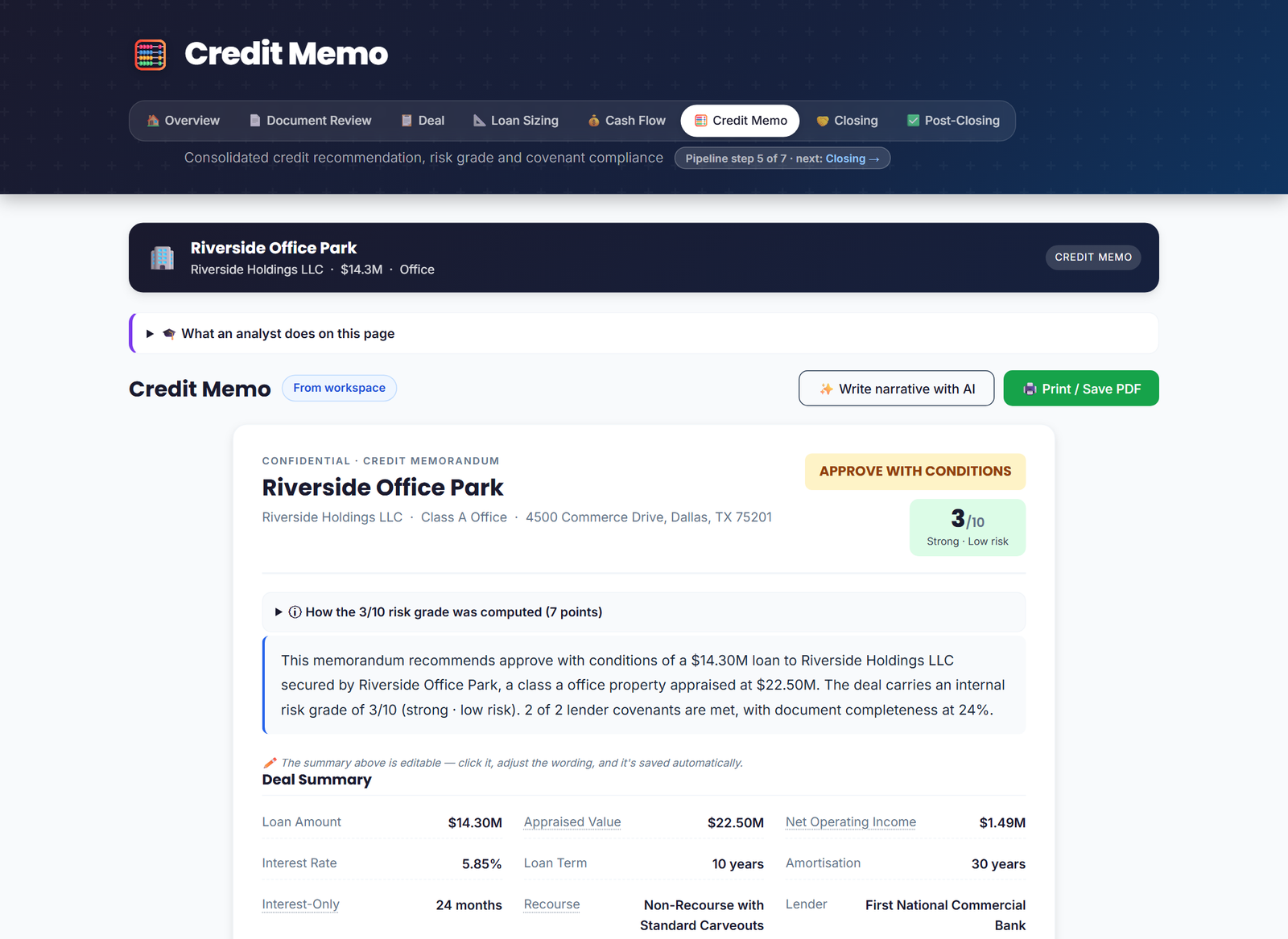
Credit Memo
Assembles a lender-ready credit memorandum — recommendation, an explained risk grade (here 3/10, strong · low risk), covenant compliance and a full deal summary. The narrative is editable and exports straight to PDF.
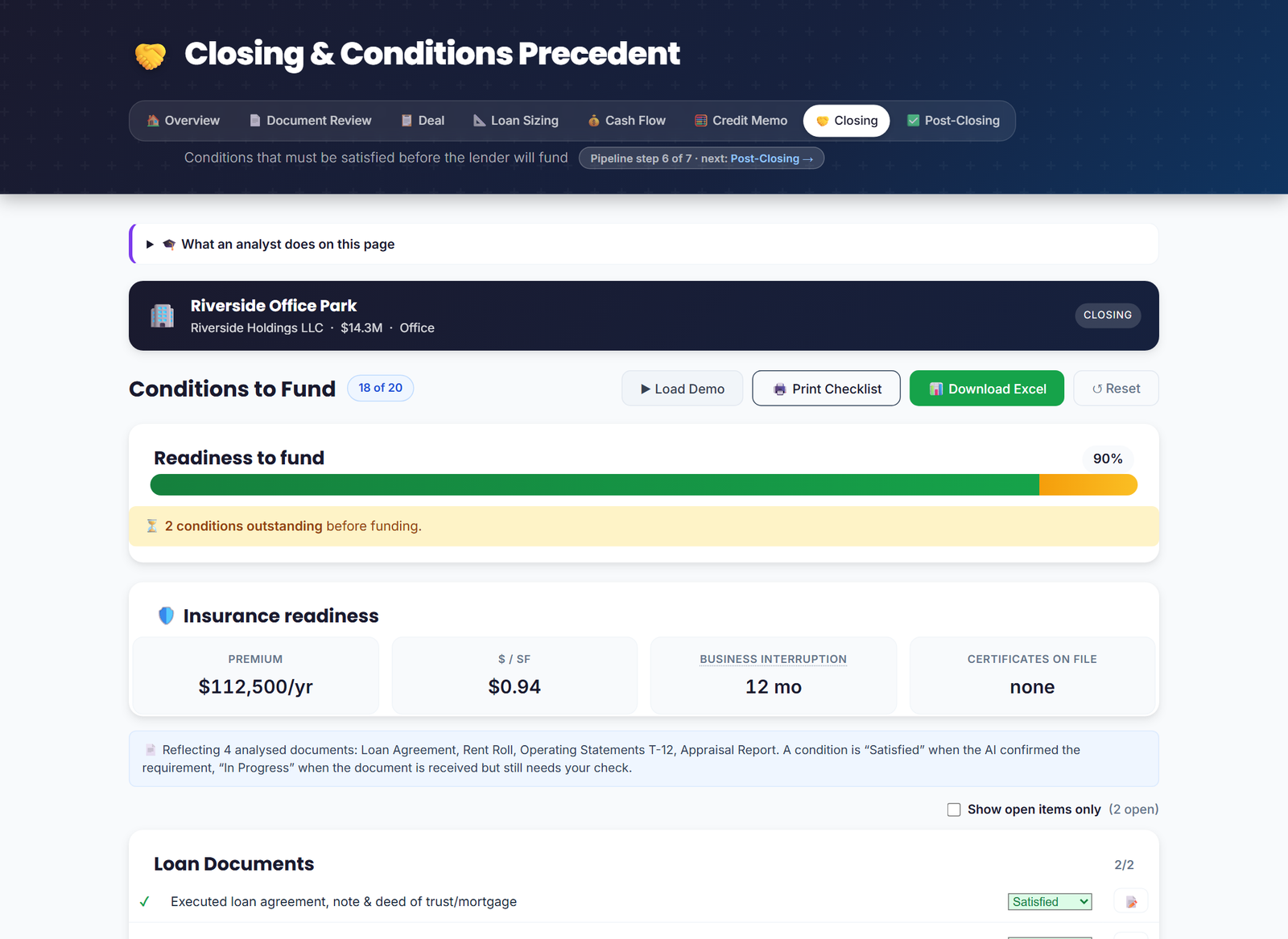
Closing & Conditions Precedent
A conditions-to-fund tracker showing readiness to fund (90%, 18 of 20 conditions satisfied), insurance readiness, and every outstanding item — so nothing blocks the lender at the last minute before funding.